
"coffee protection policy"
300 article(s) found

Theme coffee joins regional protection: one shop in one city is a wise move for long-term peace and stability.
At present, there are some brands in the market. In order to maximize the interests of enterprises, they generally adopt smaller regional protection for brand franchisees, and some even limit the protection distance to 500m or 1000 meters. as a result, one store has good business and N more stores have followed the trend. It seems that brand awareness has suddenly increased, but brand stores compete viciously with each other, opening more quickly, dying faster, and the life of the brand.
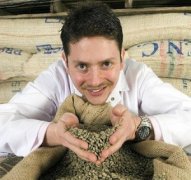
Coffee tasters buy a $14 million insurance policy to protect their tongues.
Belicia, the chief connoisseur of Kashijia Coffee, the UK's largest coffee chain, has a natural sensitivity to coffee and is responsible for about 180m cups of coffee sold each year, so the company insured its tongue for $14 million.

Mexican wet process coffee beans flavor characteristics Mexican coffee industry existing environmental problems
One of the driving forces of the economy in southeastern Mexico is agriculture. In Soconusco, Chiapas, coffee is one of the main agricultural products and is traded on international markets. Coffee grown in this area is wet-processed for commercialization as green coffee. Water is an essential resource in beneficio (coffee processing plant) and needs to be used in large quantities (Matuk et al., 1

Internet start-up coffee is strong, if you don't drink it, you will OUT.
The number of start-ups in China reached an all-time high of 3.65 million in 2014, equivalent to an average of 10, 000 companies a day, according to the data. In 2015, entrepreneurship became an absolute buzzword. On June 16, the Chinese government website released the full text of the "opinions of the State Council on policies and measures to vigorously promote Mass Entrepreneurship and Innovation" (hereinafter referred to as "opinions").

Lincang District of Lincang District of Yunnan Province issued five supporting policies to promote the healthy Development of Coffee Industry
The first is the policy of seedling subsidy. Since 2012, after acceptance, the district finance has given coffee companies a subsidy of 60 yuan per mu. The second is the incentive policy of planting, management and protection. According to the standard of 50 yuan per mu per year, the district finance will include the coffee planting funds in the budget, establish special incentive funds, and assess and reward according to the working funds of 10 yuan per mu, planting reward of 20 yuan per mu, and care and care of 20 yuan per mu.

Environmentalists bring their own cups to buy coffee but McCaf é insists on using takeout cups
Exchange of professional baristas Please pay attention to Coffee Workshop (Wechat official account cafe_style) although Hong Kong people are greedy for convenience, many people pursue environmental protection, a group of netizens who love coffee advocate bringing their own cups to buy coffee instead of taking away cups, but yesterday when they went to McCaf to buy coffee, the employees were scolded by their superiors, stipulating that they could only take away cups. Netizens who brought the cup complained that today,

[heavy weight! The coffee world is about to change! The reason why Blue Bottle withdrew from SCA has been exposed!
Professional baristas Please follow the Coffee Workshop (Wechat official account cafe_style) Blue Bottle announced its withdrawal from SCA on December 1st, Blue Bottle (one of the four major boutique coffee brands in the United States) announced its withdrawal from the participation of SCA (Specialty Coffee Association). The reason is that SCA will hold more events in Dubai in 2018 next year.

China's first batch of "Fair Trade Coffee" is exported to Europe from Yunnan.
In January this year, Yunnan Simao Beigui Coffee Co., Ltd. won the Fair Trade Certificate issued by the International Fair Trade Organization and became the first coffee enterprise in China to pass the Fair Trade Certification. Fair Trade is an organized social movement that originated in Europe in the 1950s and promotes fairness standards for global labor, environmental protection and social policies. Fairtrade products have their lowest levels.

Introduction of Colombian Coffee Manor and producing area
In the past 12-13 years, in order to increase production and income, Colombia, a big coffee country, has rewarded improved new varieties in the form of national policies (high fruit rate, strong resistance to diseases and insect pests, and low planting costs). It is even semi-mandatory to cut down old varieties and change them to improved varieties in some areas. Under such conditions, in order to protect the old varieties with small yield, easy to diseases and insect pests, but high quality, the manor has been firmly rejected.

China's legal Industry Policy on imported Coffee-the amount of Coffee imported by China per year
China's legal and industry policy on coffee import-the main functions of China's annual coffee import quantity importers association include: to obtain the understanding and support of the government, media and the public for China's coffee import as much as possible through overall publicity; to guide enterprises engaged in coffee import to abide by the relevant laws and regulations of the state; to help enterprises and relevant units solve the problems encountered in the process of import trade
Introduction to the Historical Development of Rwanda Coffee in Rwanda
Follow the caf é (Wechat official account vdailycom) found that the beautiful cafe opened a small shop of its own Rwanda Rwanda country full name: population of the Republic of Rwanda: about 9.74 million people Capital: Kigali language: Rwandan coffee annual output: 18000 tons through colonial trade policy, farmers around the country are required to plant 70 coffee trees, so created Lu

Introduction and characteristics of Brazilian Coffee
The largest coffee producer, which accounts for 1/3 of the world's coffee consumption, accounts for 1/3 of the world's coffee consumption and has a place in the global coffee market, although Brazil faces several times more natural disasters than other regions. but its acreage is enough to make up for it. There are many kinds of coffee here, but its industrial policy is large and cheap, so excellent coffee and

Vancouver Brazilian flavor Arabica ground coffee flavor description taste manor production area introduction
Vancouver Brazilian Arabica ground coffee flavor description the manor region introduces a wide variety of coffee here, but its industrial policy is large and cheap, so there is not much premium coffee, but it is a good choice to mix other coffees. One of the most famous is Sandos Coffee, which tastes mellow and neutral, and can be boiled directly, or with other kinds of coffee.

When can Starbucks bring its own cup? Starbucks launches new "cup contactless service"
Starbucks once again promotes "environmental protection" related programs. Starbucks, the world's largest coffee chain, said that starting from next Tuesday (August 24), Starbucks Starbucks will re-launch its "personal reusable cups" program in Canada, according to foreign media reports. In addition, in order to encourage more consumers to bring their own "reusable cups", Starbucks will send its own

Famous Coffee Limited Blue Mountain Coffee
Blue Mountain Coffee can maintain today's top status, but also with the local government's policy of limiting production and quality. Jamaica does not mass-produce Blue Mountain coffee regardless of quality because it is famous. Instead, quality was given priority, and it was better to sacrifice production and protect the gold-lettered signboard of Blue Mountain Coffee. Brazil, the world's largest coffee producer, produces 30 million bags (60 kg each) of coffee a year,

After banning takeout cups in Korean coffee shops, it was revealed that "mugs are as dirty as toilets."
Professional coffee knowledge exchange more coffee bean information Please follow the coffee workshop (Wechat official account cafe_style) We all know that plastic is difficult to decompose, can cause damage to the environment, and has a better chance to affect animal and human health. With the rising awareness of environmental protection, various localities have launched plastic reduction actions to contribute to the environment. Last year, South Korean coffee shops joined the ranks of plastic reduction and responded to the government.

Would you like your coffee with or without sugar and milk? Is it lack of inclusiveness?
For more information on coffee beans, please follow the new generation of high-end coffee shops in coffee workshops (Wechat official account cafe_style), which have adopted a zero tolerance policy on sugar, milk and cream to protect the quality of coffee they believe. Other high-end stores even choose not to sell takeout coffee mixed with small espresso, because they feel that if they don't stand
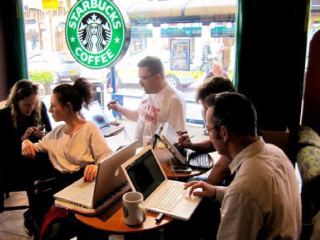
Starbucks CEO begged employees to return to their posts on their knees! Howard hinted that Starbucks bathrooms are no longer open to the public for security reasons.
With its comfortable store environment and friendly attitude to the public, Starbucks has made a good impression on Starbucks as a coffee brand. Even going to Starbucks stores without spending money, using its toilets, or finding a place to sit down and rest are allowed. But recently, Starbucks CEO Howard

Taiwan Cafe recommends Cafe on Chimney
Take the high-speed elevator to the 120-meter-high revolving restaurant, sit down while drinking coffee and dessert, overlooking Yangming Mountain and Guanyin Mountain, overlooking the Tanshui River, Keelung River and Guandu Waterbird Reserve. This is not in the Taipei 101 Building, but at the Beitou Municipal solid waste Incineration Plant in Taipei City, Chau Mei Street, Beitou District. In the factory area stands the big chimney that is common in the factory, but

Colombia Coffee Plantation Flavor Description Taste Variety Introduction
Colombia coffee plantation flavor description taste varieties production area introduction in the past 12 to 13 years, coffee country Colombia in order to increase production and income, in the form of national policies to reward improved new varieties (high fruit rate, strong pest resistance, low planting costs), and even in some areas of semi-mandatory requirements to cut down old varieties to plant improved species. Under these conditions, to protect small yields